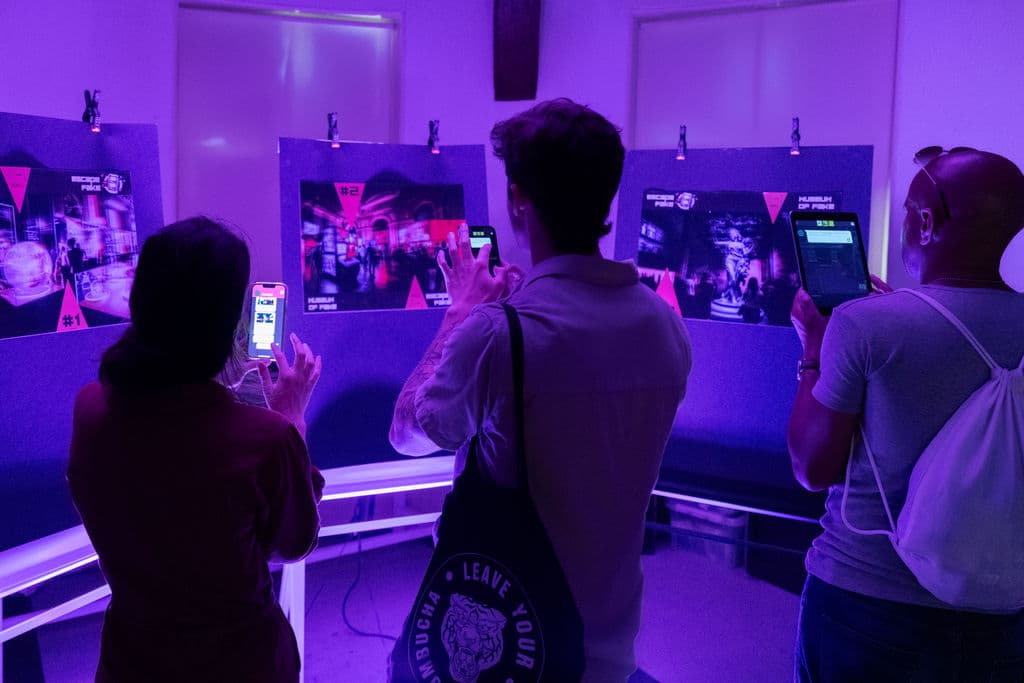
Recently, the manosphere has become an increasingly concerning presence online, with its influence reaching growing numbers of young men. Referring to a network of online communities centred around men’s issues and masculinity, parts of the manosphere promote misogynistic attitudes and harmful ideas about gender. Waag Futurelab has co-developed an interactive AR game that helps young people explore the mechanisms behind the manosphere’s online influence in a safe and playful way.
Unpacking the manosphere
If you scroll long enough as a teenage boy, your algorithm usually starts to make harmful suggestions. It might begin with gym routines, dating advice or tips on how to look better (looksmaxxing), but end somewhere much darker. This corner of the internet is known as the manosphere, with its coded language and dangerous theories such as "red pill theory", a set of beliefs that claims society hides the “truth” about gender relations and that men need to reject mainstream views on relationships, masculinity, and women.
More concretely, manosphere is a loose network of influencers, forums and online communities, from self-styled "alpha male" coaches to incels, that sells young men a story about what it means to be a man. That story often comes with contempt for women, rigid ideas about gender roles and the promise that someone else is to blame for their insecurity or loneliness. Recommender systems can actively amplify this harmful content, as insecurity and outrage are known to drive engagement, while patriarchal backlash can further reinforce its visibility and reach.
Last Seen Online: solving an escape room in AR
The manosphere is one of the clearest examples of a wider problem: platforms that turn young people's need for identity and belonging into engagement, nudging them step by step toward more extreme content. By the time teachers or parents notice, this escalation has often already happened. Last Seen Online, the new chapter of the augmented reality game Escape Fake, lets young people (ages 13 and up) experience the rabbit hole from the inside and learn to recognise it in a safe, playful setting.
The chapter is released together with the Escape Fake Starter Kit, a physical box with card games and printed materials for easy use in the classroom. The player scans the printed material with the Escape Fake app on mobile phone, where they are presented with an escape room-style mystery that they can play out on their screen.
In Last Seen Online, the fourth chapter of the game, a user called @TryHard_Trivia has disappeared from his digital universe. All that is left are scrambled messages from three friends, each pulled into a different online community: a fitness account chasing physical perfection, a cooking and lifestyle blog sliding into rigid ideas about how to live, and a wellness feed where spirituality starts to replace medical advice. Players investigate the disappearance while the content inside these bubbles escalates. Halfway through, they have to name the friend they believe pushed the victim offline, and confront them with the consequences of that choice.
The story was developed together with young people in three countries, and it mirrors what research shows about social media platforms. In a study by UCL and the University of Kent, misogynistic content in the TikTok feeds of accounts set up as teenage boys rose from 13% to 56% of recommendations. A 2026 Eurobarometer survey of more than 26,000 teenagers found that nine in ten across the EU had encountered harmful or distressing content online in the previous three months. Last Seen Online premiered at Ars Electronica Festival 2026.
About this collaboration
Escape Fake is developed by Austrian studio Polycular, with partners Waag Futurelab (NL) and dpa (DE). The project is co-funded by the European Union under the Creative Europe programme. Last year Escape Fake received the European Digital Skills Award 2025 in the category Education, awarded by the European Commission.