How can we reimagine textile printing as a dialogue between hand, machine and living matter? How do we safeguard traditional craft knowledge while opening it up to experimentation, iteration and collective authorship?
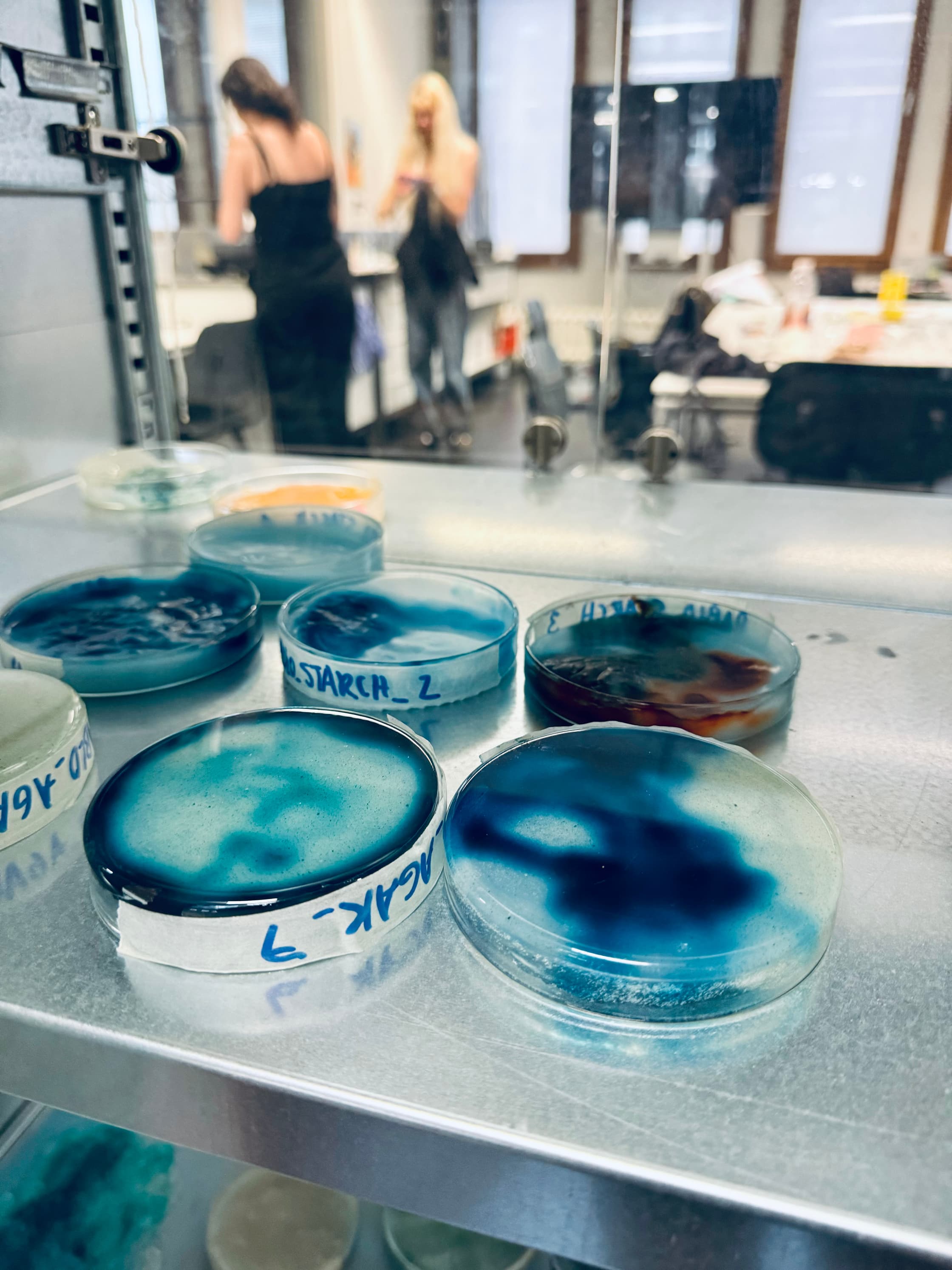
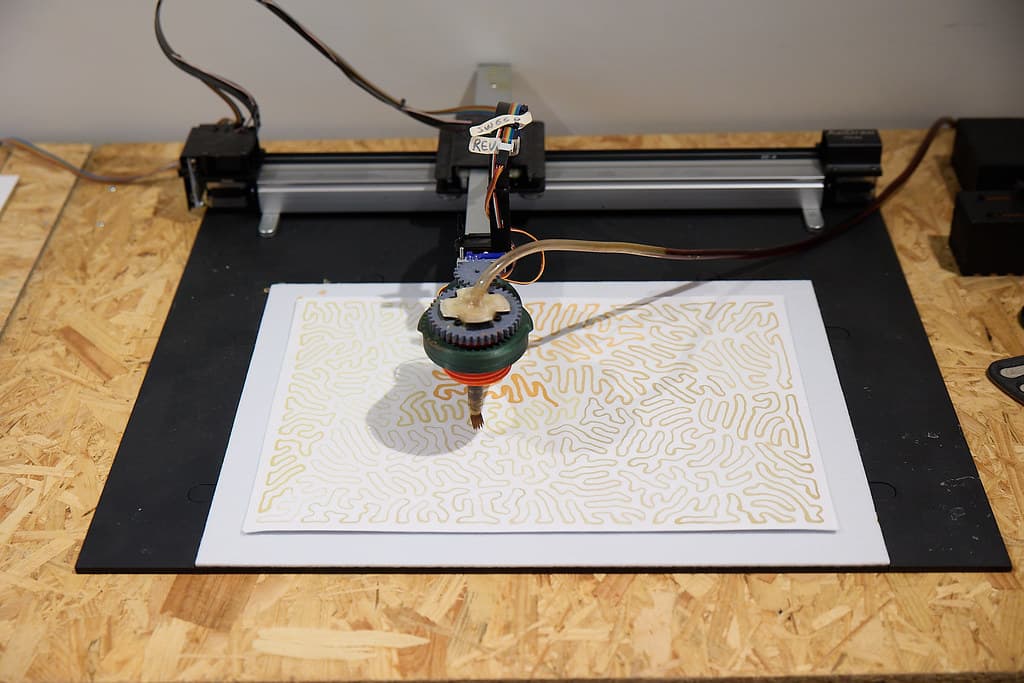
Within the European project Tracks4Crafts, Waag Futurelab’s TextileLab explores these questions through the pilot Hacking the Machines. One of its central outcomes is HaptiColor: an open-source machine protocol for textile digital printing with natural dyes.
HaptiColor positions craft not as heritage frozen in time, but as a dynamic system of embodied knowledge, be it cultural, technological, economic or social, its role is to inform future sustainable modes of making. Bringing together craftspeople, designers, coders and researchers, the protocol proposes a new relationship between colour and code, material and machine.
From Machine Control to Material Dialogue
At the heart of HaptiColor lies a shift in agency. Rather than automating textile printing into a one directional system (design > send > print) the protocol enables responsive interaction. The craftsperson intervenes directly in the process, adjusting gesture and dye flow in real time.
Its development unfolded along five intertwined trajectories: tool; tool-holder/hands; medium; machine/body; and code/language. Together, they resist a strict divide between digital and analog domains. The machine becomes a collaborator rather than a neutral device.
Technologies, which at first created a gap between the craftsperson and the practice, can bridges them closer again.
The Living Archive
The development of HaptiColor is documented in a living archive: a dynamic online space that shares findings, methods and reflections from the pilot. In line with open-source principles, it foregrounds process over product, where the archive functions as both documentation and invitation to discover and recreate. The Living Archive can be be found via this link [hapticolor.textilelab.waag.org] and consists out of the following sections:
Developments
Written in a thinking-out-loud mode, this section traces decisions, detours and discoveries in hacking machines into textile printers for natural dyes. It reveals iterative learning rather than polished outcomes.
Hacks
Assembly guides and documentation of experimental modifications are shared openly. These prototypes encourage adaptation to different contexts.
Hybrid Encounters
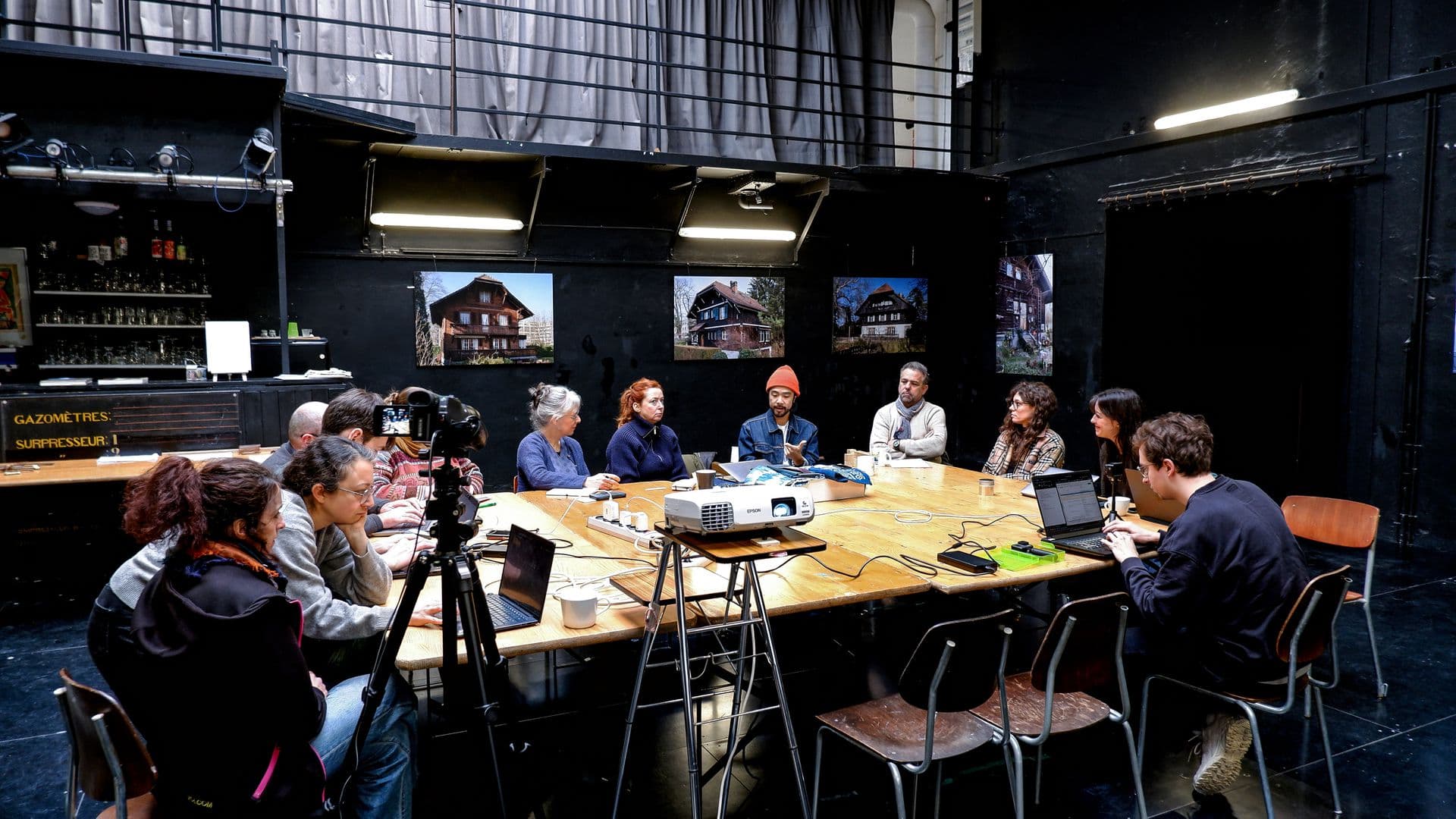
Workshops, collaborative sessions and expert exchanges are documented as moments of testing and reflection. These interdisciplinary gatherings recalibrated both the technical setup and the conceptual framework of HaptiColor.
Glossary
A supporting glossary bridges historical and contemporary terminology of innovation. Certain Dutch terms, such as “drukken”, remain untranslated to preserve their embodied and cultural nuance.
Stories
Interviews with traditional and hybrid craftspeople situate HaptiColor within broader social and historical contexts, including critical reflections on the histories embedded in European textile production.
Craft as Future Infrastructure
HaptiColor demonstrates that innovation does not require abandoning tradition. Instead, it asks how traditional techniques can be reactivated through open technologies. By documenting machine hacks, sharing code, adapting ink recipes and highlighting the embodied expertise, the project reframes craft as infrastructure for sustainable and regenerative futures.
Through its living archive, HaptiColor remains unfinished and deliberately so. It is a protocol that invites participation, adaptation and critique. In this sense, crafting colour and code is not simply a technical exercise. It is a collective practice of shaping how knowledge is shared, embodied and hopefully sustained.
Machines are being hacked. The archive is open. The process continues.
Curious?
To learn more, visit hapticolor.textilelab.waag.org.