Meta censored queer and feminist organisations earlier this year. Most of these accounts are now back thanks to the effort put in. However, this doesn’t mean that everything immediately returned to normal afterward. So, where do we stand now, and what are the next steps to be taken?
We spoke with Caspar Pisters, community manager of Club Church, Sauna Nieuwezijds and Free Willie, about the impact of the ban.
The legal route
On 20 May 2026, law firm Bureau Brandeis sent a formal demand letter to Meta on behalf of Bits of Freedom, Repro Uncensored and eleven affected organisations - Club Church, Free Willie Amsterdam, Sauna Nieuwezijds, COC Nederland, BUTT Magazine, The Queer Agenda, Tillatec, Striptopia, Queer Gallery and No Limits! Art Castle.
The demands of the coalition were threefold and more concerned with the process rather than the underlying discrimination claim. Meta may not block an account without a serious reason, established by a human being. Each affected organisation must be told which specific rule was broken, and whether a person or a machine decided. And there must be a named contact, so that a cultural institution is not left arguing with an automated system.
The legal basis for the letter was the Digital Services Act, supported by GDPR and Dutch anti-discrimination law. The coalition's lawyers describe it as the first case in which the DSA is being used against discriminatory content moderation by a very large online platform (VLOP), and the coalition has framed it as an escalation toward a European class action.
The coalition also has a good precedent now, because previously, Bureau Brandeis and Bits of Freedom already beat Meta on the DSA, in the first private enforcement of the regulation, in October 2025. Meta appealed, withdrew nearly all of its substantive objections a working day before the hearing, and in March 2026 the Amsterdam Court of Appeal ruled against it again and raised the potential penalty from five to ten million euros.
The restitution process of the accounts
Caspar Pisters runs communications for Club Church, Sauna Nieuwezijds and Free Willie. All these accounts were subjected to Meta's ban. Now, everything is back online. It took two to three weeks and it required the press getting involved. "We got it back by stirring up commotion," Pisters says. It appears this is the only available option banned accounts have, as the in-app appeal form seems to submit into a void.
Pisters still does not know why they were restricted. There has been no legitimate reason offered, and Pisters is clear that they have no interest in constructing one for themselves. "We don't want to play the guessing game. Guessing is the labour the platform offloads onto the people it punishes, and once you accept the job, you have accepted the premise that something you did caused this.” The created uncertainty is part of the censorship.
Was (self-)censorship the ultimate goal?
Pisters says they are forced to be more careful now with some of their word choices. The organisations are forced to assume Meta’s new unwritten, abstract, unequal, and discriminatory content moderation policies and come up with new ways to try to tease, suggest and gesture at their events and activities. Unequal treatment produces self-censorship. When the enforcement is arbitrary and the appeal is a sort of theatre, you are forced to control and shrink your output to stay visible to your community.
This is the sustained part of platform censorship; people anticipate the consequence and quietly adjust in advance. Repro Uncensored’s interviews with artists in China in early 2026 found exactly this, and it is uncomfortable to see the description travel so cleanly to a club on the Kerkstraat. The vocabulary of a community is narrowing down; its promotion is getting vaguer; the venue is becoming harder to find.
Why not just leave?
The obvious answer is the fediverse. Mastodon, Pixelfed, something federated and unenclosed, something that cannot delete you. Waag has argued for public digital infrastructure for years, and the case here is self-evident.
Yes, there are fewer people on the alternatives. Pisters calls it empty bar syndrome. The room is not judged on its governance model. It is judged on the size of the audience. And sacrificing the reach is harder. Giving up what you have built is a real loss. It often took decades of door lists and word of mouth and slow accumulation. And because of the closed infrastructures of big tech’s platforms, no export function exists to move your account to a new, open social media platform.
And yes, some organizations lack a clear and effective method to make the transition, be it gradually or fully. Pisters says they need more strategy to make such a transition. Repro Uncensored reached the same conclusion after interviewing sex workers at Berlin's SXFestival Expo this summer, and found that governance alone cannot move some users or organizations that easily, because audience, discoverability and income are what actually tie people to the large platforms. That is why, says Pisters, a follow-up on thinking together on marketing and promotion strategies outside of big tech would be especially beneficial. How do you build an audience somewhere else, how do you move one, how do you keep a venue findable even without these big tech platforms?
What's beyond the ban?
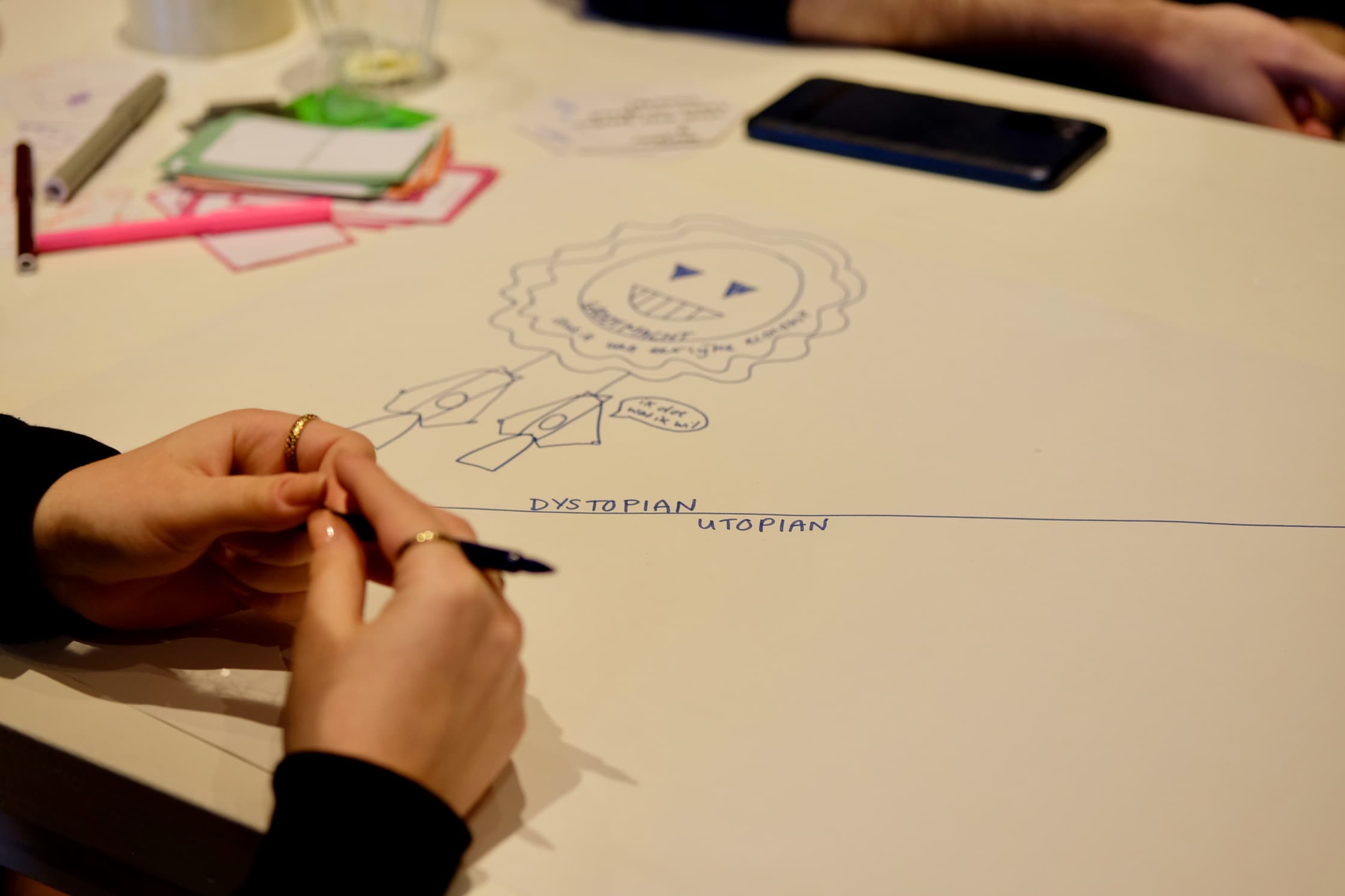
After the ban, at Waag, we hosted a roundtable discussion about what can be done. Representatives from queer and feminist organizations as well as digital rights NGOs gathered at Waag to brainstorm ideas, express feelings, and form a sense of community around this discriminatory threat. We published two articles, You're banned by big tech. Now what? and Whose land is the feed? How techno-feudalism explains Meta's censorship on queer and pro-choice. This piece is an attempt to follow up further on the question the title asks.
We understand that the fediverse is not that strong of an answer from a communications and audience-building perspective as it is from the technical and ethical perspective. But still, we need to find existing alternatives and start building. Think about your own promotion, marketing, and audience-building strategies, tailored to your communities and needs. Organise "leaving Meta platforms" days or collective actions if need be. Build alternatives while keeping the existing ones. Then, at least, you have an unfiltered, uncensored, and unhinged alternative to express yourself as freely as you want and deserve to! Maybe that in itself will be attractive enough for your audience. Don't worry about cross-posting across different platforms - use apps or software to post simultaneously across your platforms (i.e. Buffer).
Waag organises various events and meet-ups on alternatives to big tech. Keep an eye on our calendar. Join the next Waag Open On the hunt for public tech.