How do we as a society use data for social objectives? And what are the conditions that are important in doing so? These questions are related to the reasons for collecting, managing, storing and sharing data. Reasons such as taking sustainability measures, conducting research to improve health care, making it easier to protect cultural heritage or ensuring that sufficient food is available to the population in the long term.
The European social economy encompasses a wide range of businesses and initiatives. Data-centric social enterprises, such as health data cooperatives, platform unions or non-profit organizations, are realizing that access to and reuse of data offers new opportunities. These organizations rely on data as an integral part of their operations. Which data can be useful, how to exchange and reuse it, and how to establish partnerships with other organizations around data is currently insufficiently defined. Within both data-centric organizations and more traditional social domain enterprises, there is a need to build on the use, collection and storage of data within the ecosystem.
Working closely with the European Commission (Directorate General GROW), Waag Futurelab and the Commons Network have joined forces to develop a Code of Conduct. This Code of Conduct established a set of principles for how data should be managed and used for the benefit of the social economy, building on the existing EU regulatory framework and the values underlying the social economy.
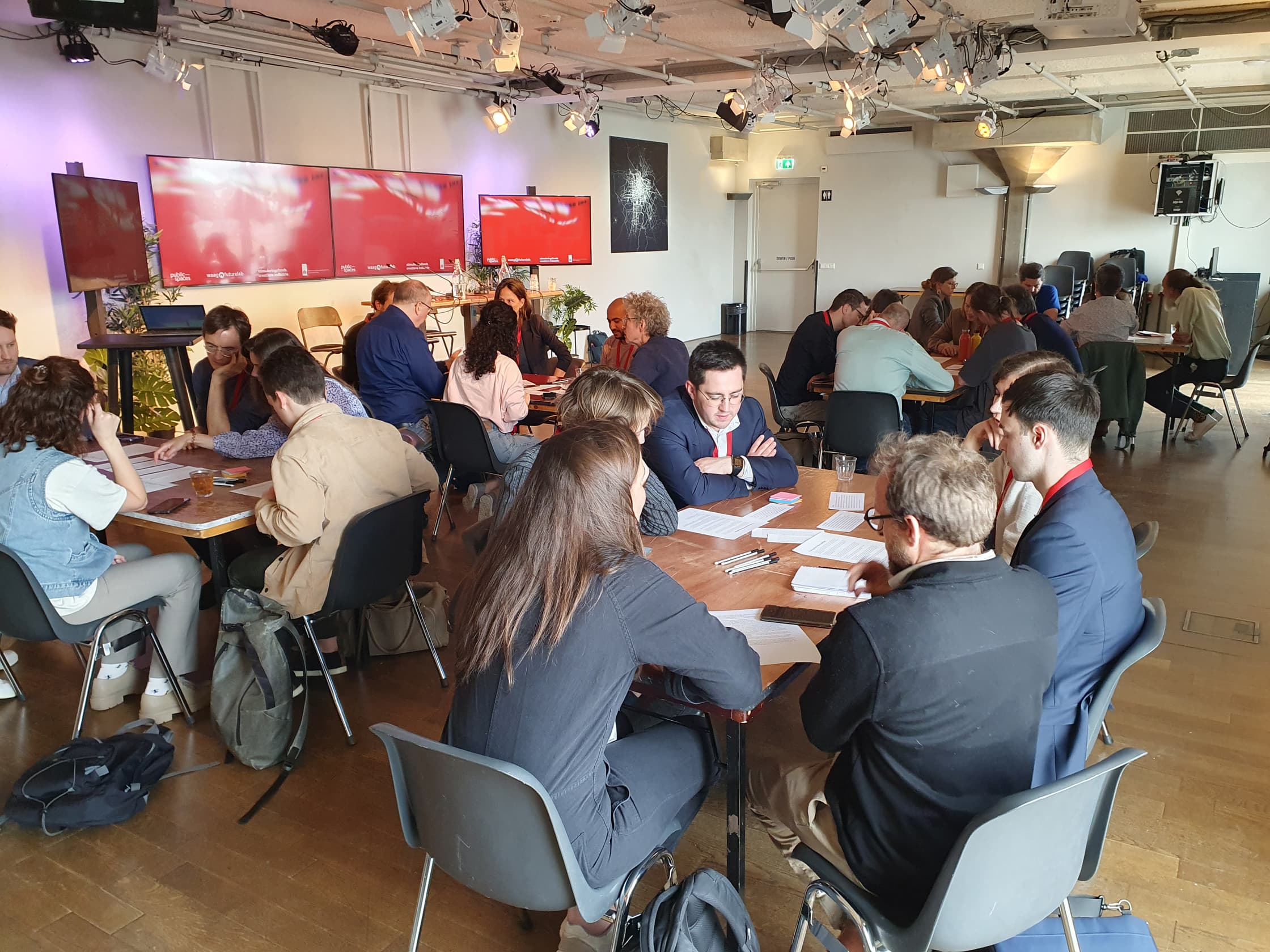
In addition to the principles, the Code of Conduct for Data Sharing in the Social Economy includes guidance documents, templates and good practice examples so that parties within the domain can get started in practice. Over the course of nine months, Waag facilitated the process in which 21 European social economy organisations jointly developed the code. On 28 November 2024, Waag Futurelab and Commons Network presented it in Brussels.
The project illustrates how the mission of Waag Futurelab is put into practice by co-developing frameworks for data sharing with civil society organisations. In doing so, public values are not left at an abstract level but are translated into actionable principles and guidelines for the social economy.
Meta data
Project duration
Links
Team


Financiers

Partners