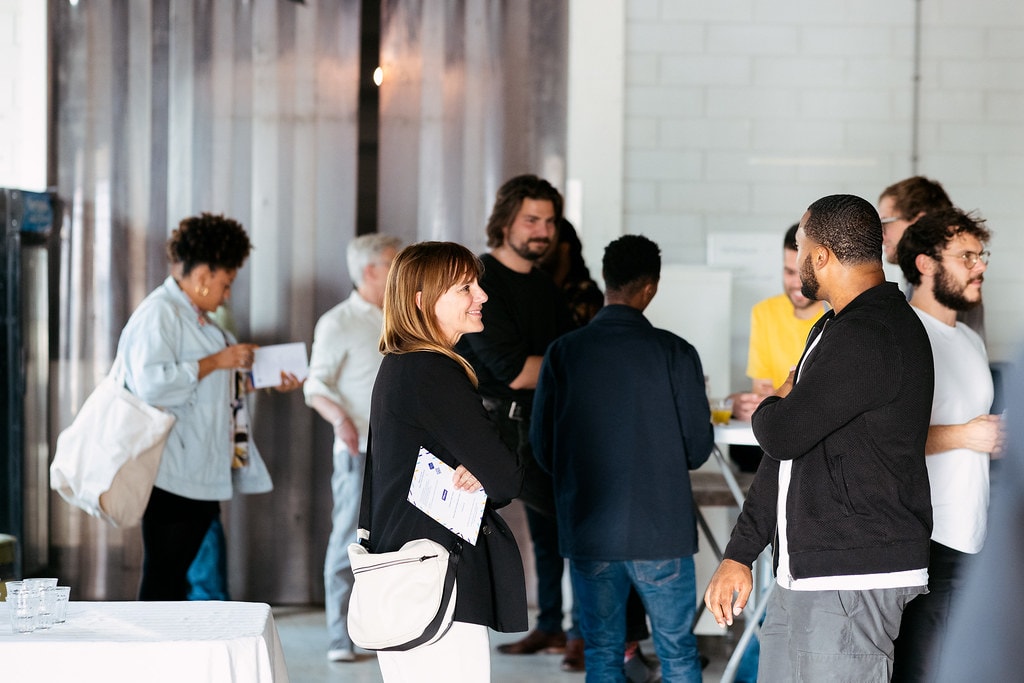
Municipalities are increasingly using AI to involve residents in policy and decision-making: think of AI agents that simulate angry citizens, tools that record and analyse conversations, and chatbots that help navigate complex legislation. These technologies not only make processes more efficient, but can also increase resident engagement.
However, these applications don't only offer opportunities, they also bring risks. They can strengthen direct dialogue with residents, but they can just as easily be used to replace it. When digital systems become too dominant, average or common opinions gain the most space, while other voices become less visible. This can widen the gap between government and society rather than close it.
Research into participation processes
For this reason, Waag is working with Hogeschool Rotterdam and Hogeschool van Amsterdam to research how AI can contribute to participation processes in which different voices remain visible. The project focuses specifically on municipal participation and the dilemmas that civil servants and residents experience within it. Using the Public Stack, the research team analyses how technology is applied and which assumptions play a role. The team also examines how AI is positioned as a solution, and what this means for the quality of participation.
Building on the research insights, the team develops prototypes of participation processes in which AI strengthens pluriformity, in other words the diversity of perspectives. These demonstrate concretely how technology can contribute to a more inclusive dialogue between government and residents. Ultimately, the project delivers design guidelines and methods for value-driven participation, enabling governments and organisations to use AI more consciously and carefully in their participation processes.
Meta data
Project duration
Team
Financiers

Partners

