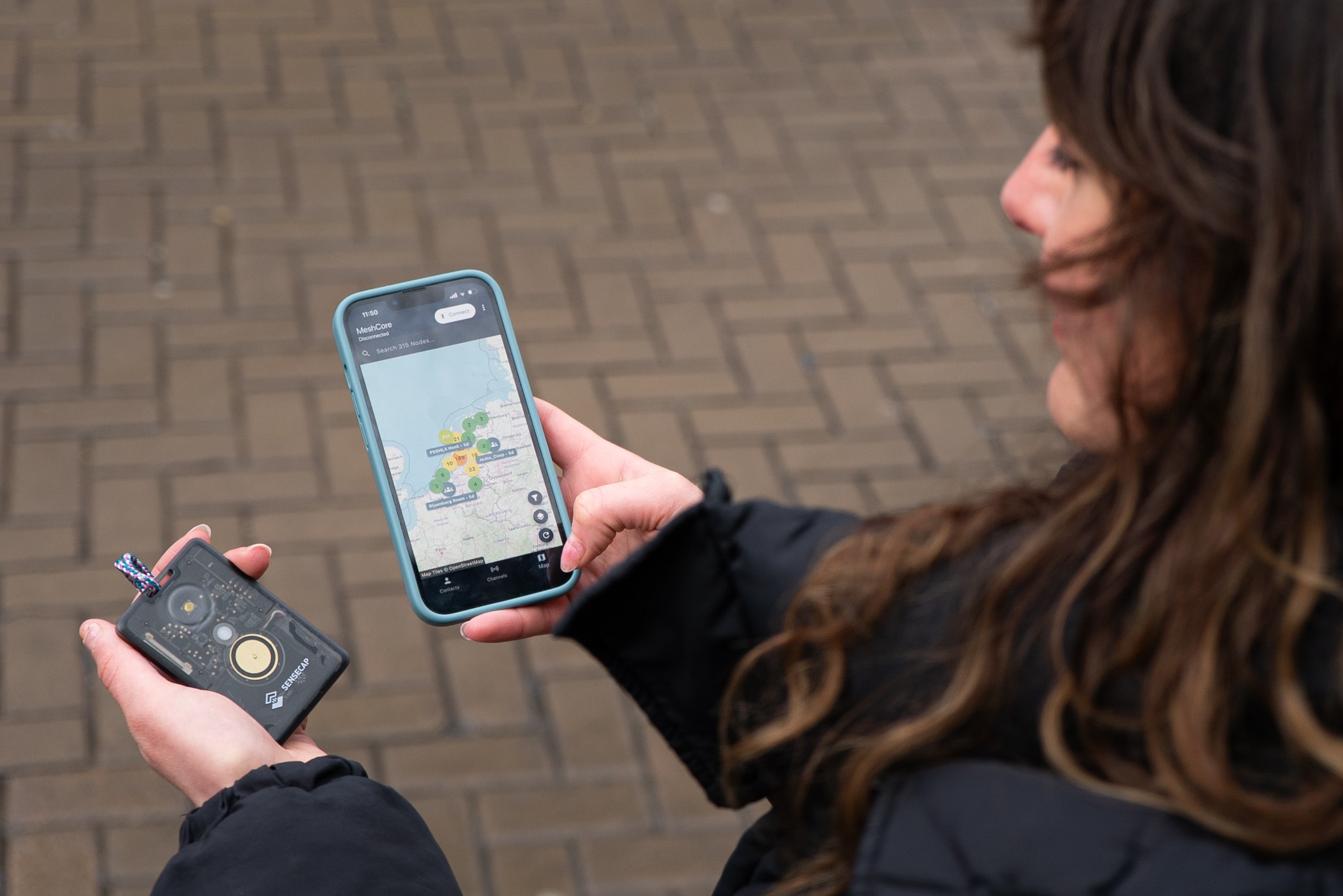
A power cut can bring traditional communications infrastructure to a standstill. Mobile networks fail when mobile phone masts lose power. Internet via cable or fibre-optic cables does not work without electricity. A robust emergency communications system is needed, particularly in large cities such as Rotterdam.
Mesh networks offer a potential solution. Devices communicate directly with one another and together form a network without a central infrastructure. Messages of up to 140 characters ‘hop’ from device to device until they reach their destination. Mesh networks always function, even when other telecommunications networks have failed. They are relatively low-tech and therefore consume very little energy: a node can last several days without recharging. Also they can quickly be recharged with a simple solar panel or power bank. Nevertheless, the technology behind mesh networks is experimental, and more knowledge is needed on how they can be deployed in emergency situations.
In the project NodeNet010 Waag Futurelab is working with the municipality of Rotterdam to explore which initiatives in the region are already experimenting with mesh networks. What is driving them to do this, and what technology are they using? What will they need in the future to expand their research, and could the municipality of Rotterdam play a role in this? If so, what role?
We conduct interviews and bring interested parties together on thursday 19 November to explore what the next step might be in setting up an emergency communications network in Rotterdam.
Do you live or work in the Rotterdam region and are you experimenting with mesh technology? Or are you interested in resilience and emergency communication? Please contact ola [at] waag [dot] org.
Meta data
Project duration
Links
Team





Financiers

Partners