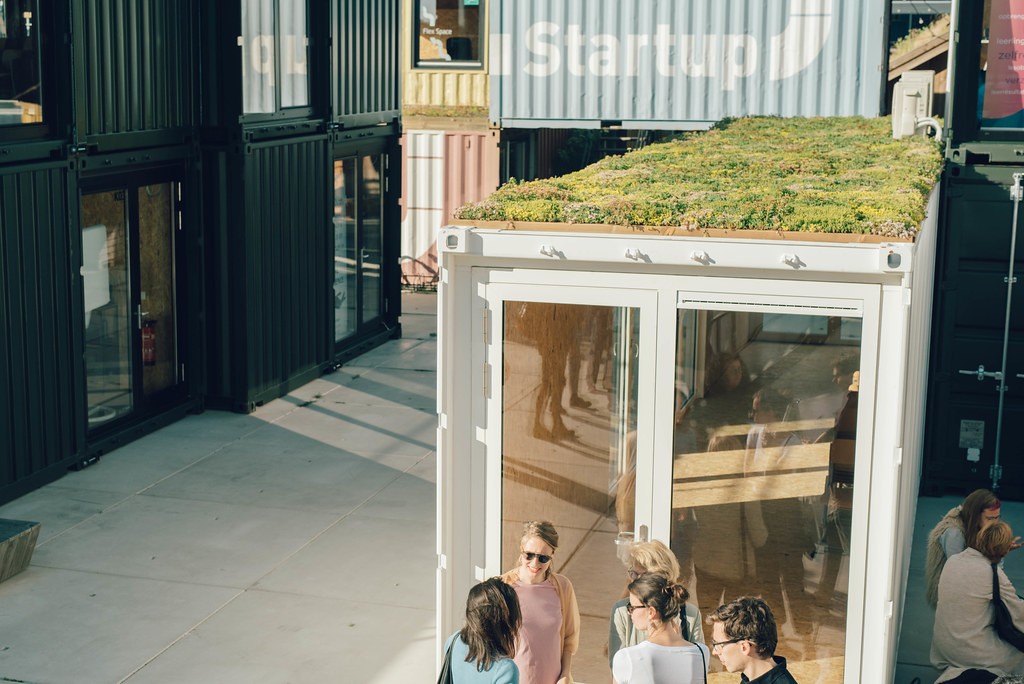
What chances and possibilities lie within the temporary initiatives or ‘meanwhile spaces’ of urban areas? How can we enliven these initiatives in an inclusive way that offers space to a variety of life forms: people, plants, animals and microbes? For a period of two years, Waag explored these questions at Amsterdam Science Park with the EU-project T-Factor.
The challenge
Together with ecologists, artists, researchers and local ambassadors we investigated how animals, plants, humans and microbes come together at Amsterdam Science Park. We want to unravel what kind of urban ecology practices are needed to enliven and strengthen the temporary use of urban areas in development, in a nature-inclusive way. With T-Factor, the goal was to demonstrate how culture, creative collaboration and wide engagement can unleash vibrant urban hubs of inclusive urban (re)generation. Moreover, these places offer space for social enterprises.
Amsterdam Science Park. Photo: Masterplan Amsterdam Science Park
T-Factor at Amsterdam Science Park
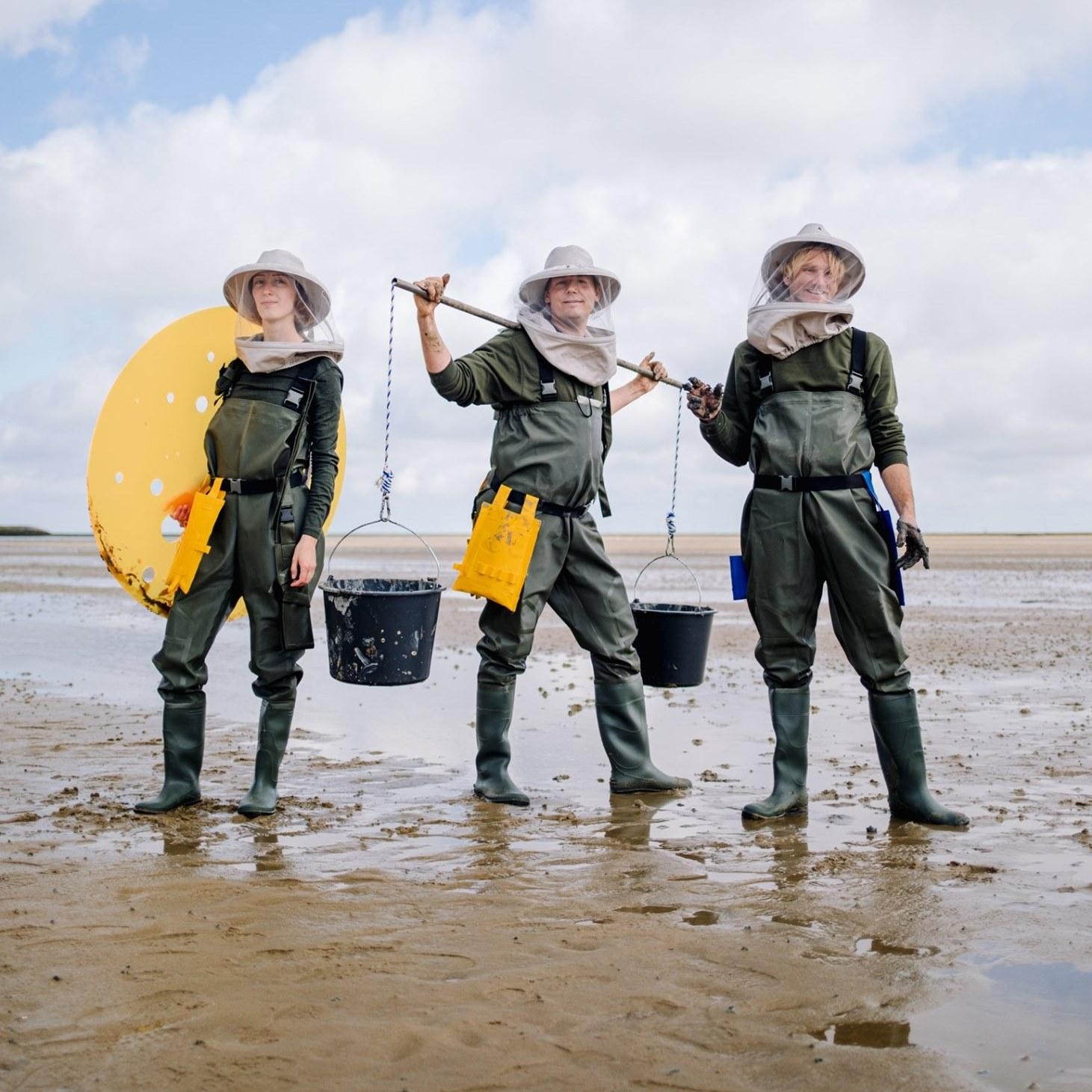
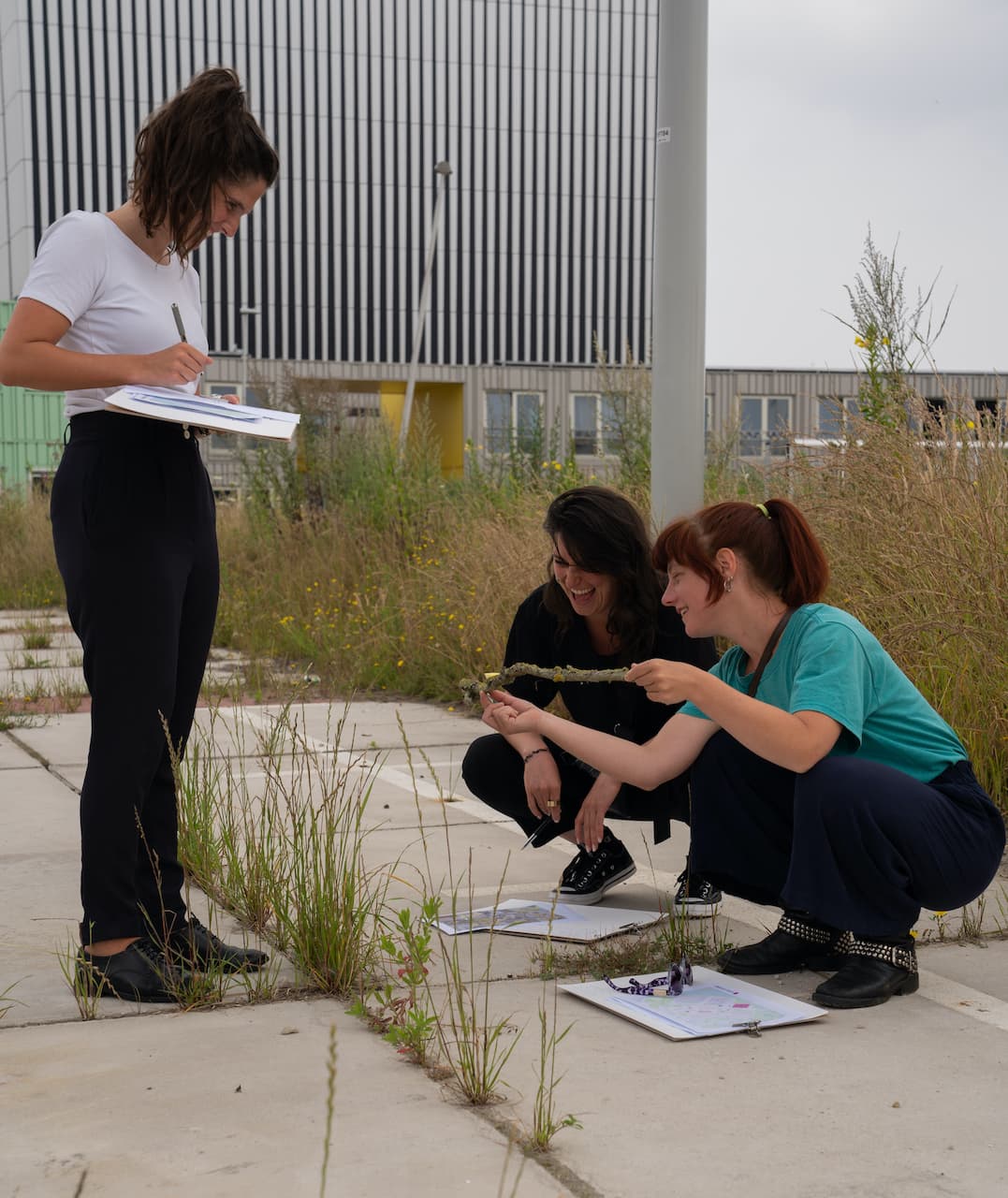
Waag coordinated the Amsterdam pilot from its outpost at the Amsterdam Science Park. Together with the local coalition of actors, we used the Amsterdam Science Park masterplan as the starting point to steer collective inquiry into its meanings and narratives, experimented with different kinds of explorative and urban ecological practices in the field and co-created shared visions of future spaces and uses.
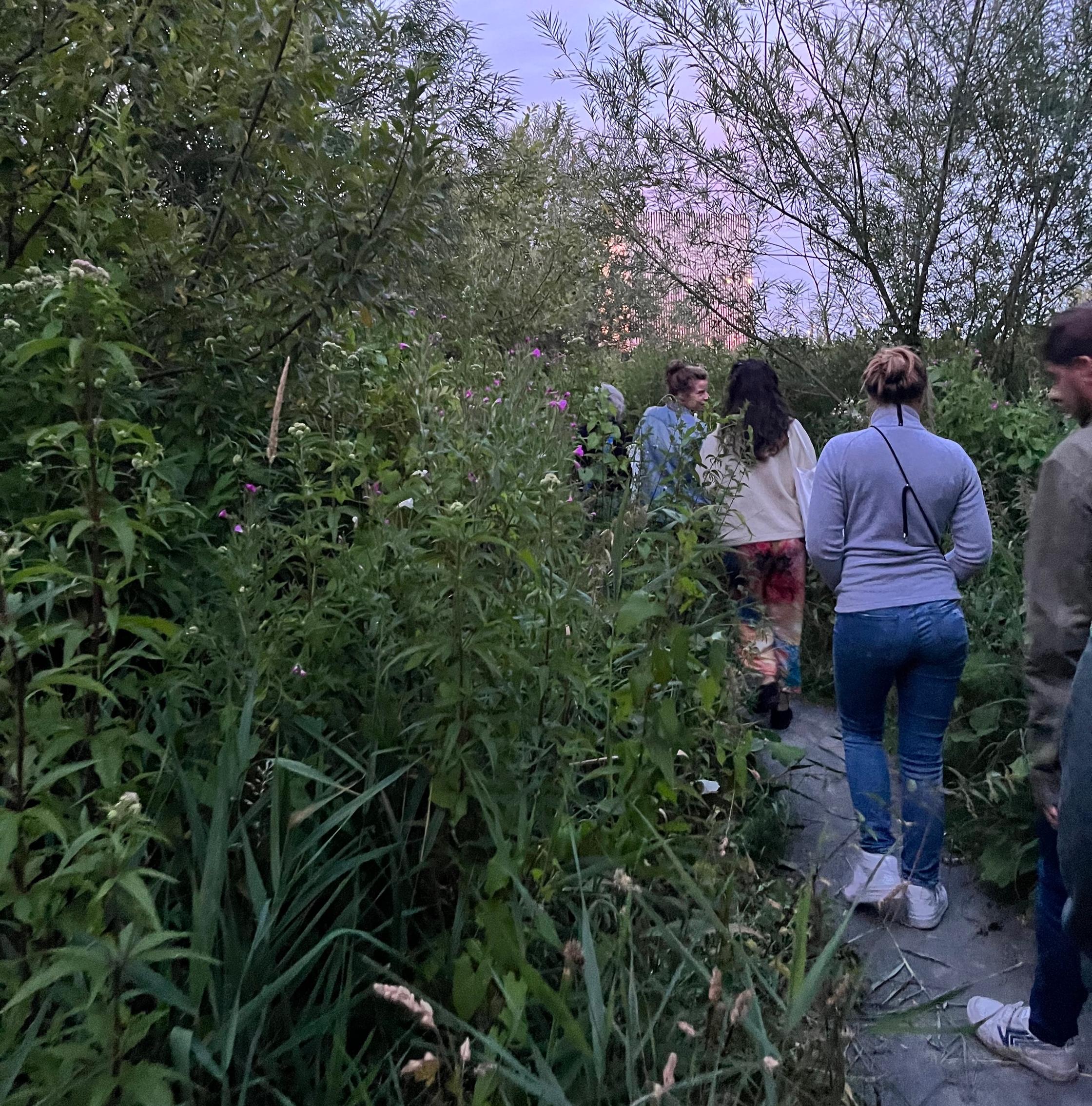
From there, we hosted field trips, workshops, walks, symposia, presentations and public programmes for anyone who is interested in creating ecology-related improvement in urban areas. Take a look at the symposium Building as Being for example, that we organised in april 2021 together with artistic researcher Esmee Geerken.
De Groene Maakplaats op Wielen
One of our ambitions was to create a physical place at the Amsterdam Science Park, as a meeting place for the community, for exhibitions, inspiration, public programmes and biodiversity interventions in public space. All aimed at creating a new perspective on urban development; together with other animals, plants, soil, air and micro-organisms.
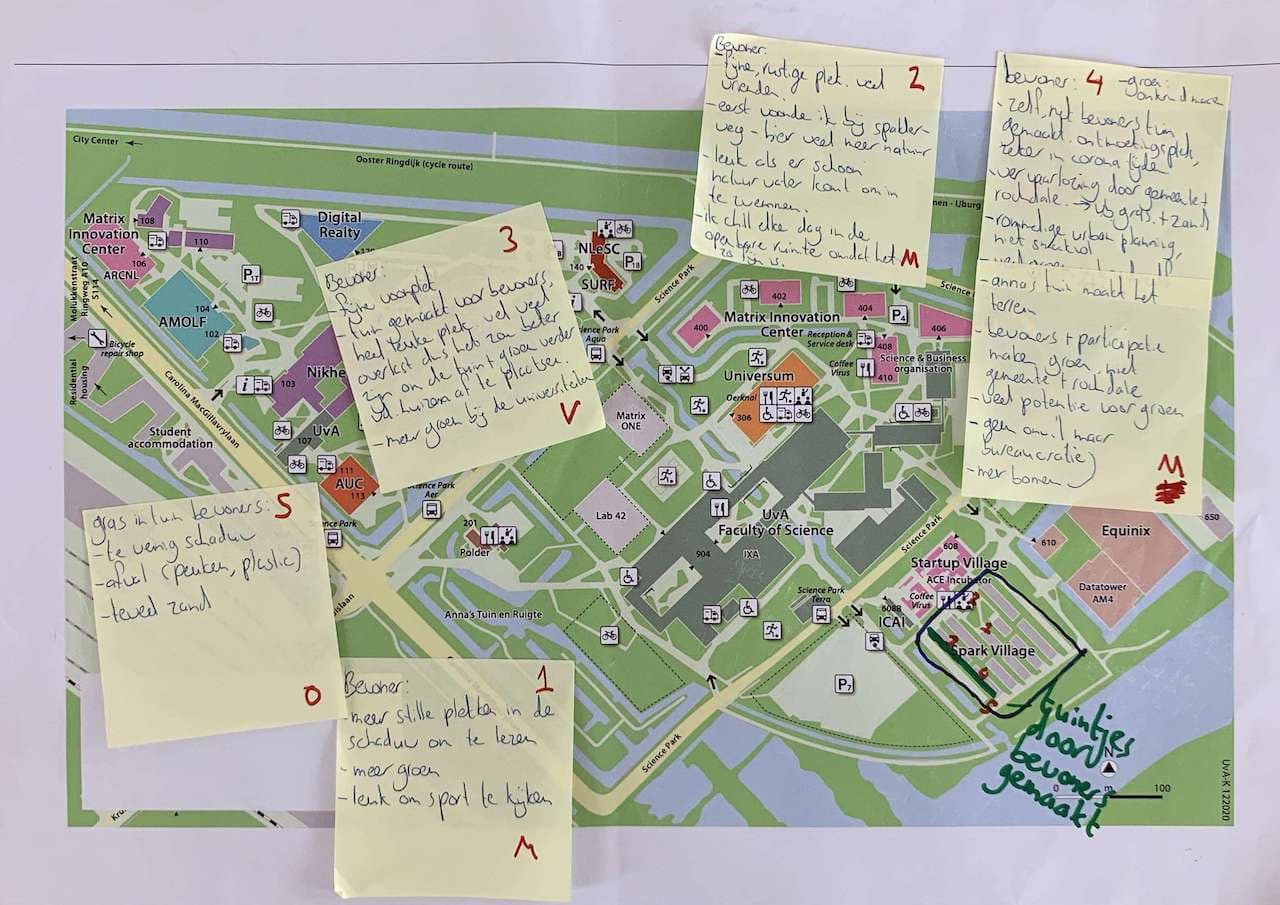
Realising this place could not happen fast enough for us. Therefore, Waag started experimenting from an installation on wheels! From this De Groene Maakplaats op Wielen (Green Making Place on Wheels), we organised all kinds of activities in all corners of the Amsterdam Science Park from March 2022 to mid-December 2023. From biodiversity walks, to workshops on making field notes, to brainstorms on how we are going to make the public space greener together. We also talked to people who passed by about how they experience and appreciate the park. And if there will be such a place around ecology at the Amsterdam Science Park, what should happen there?
Met Andere Ogen: The landscape festival
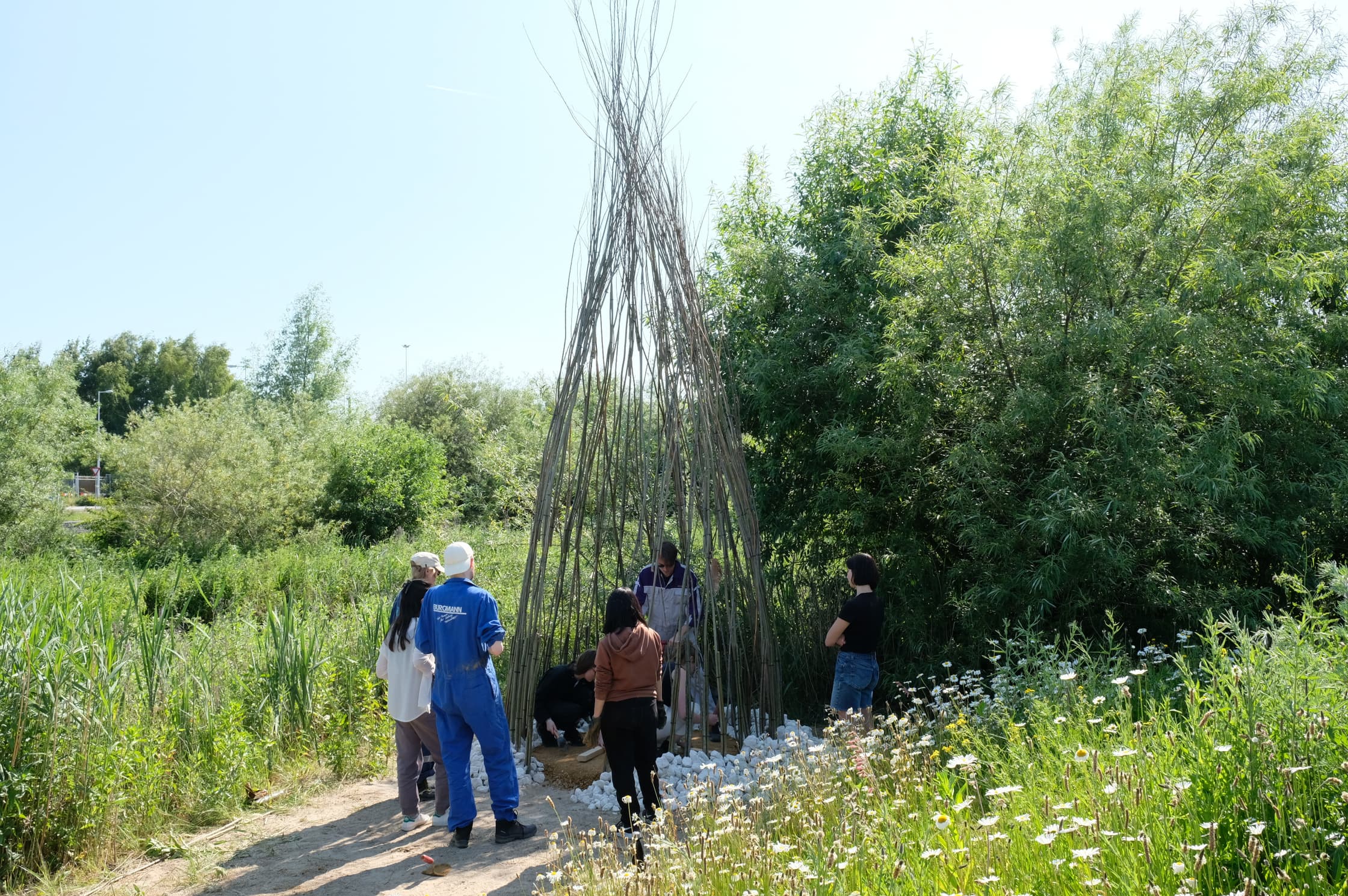
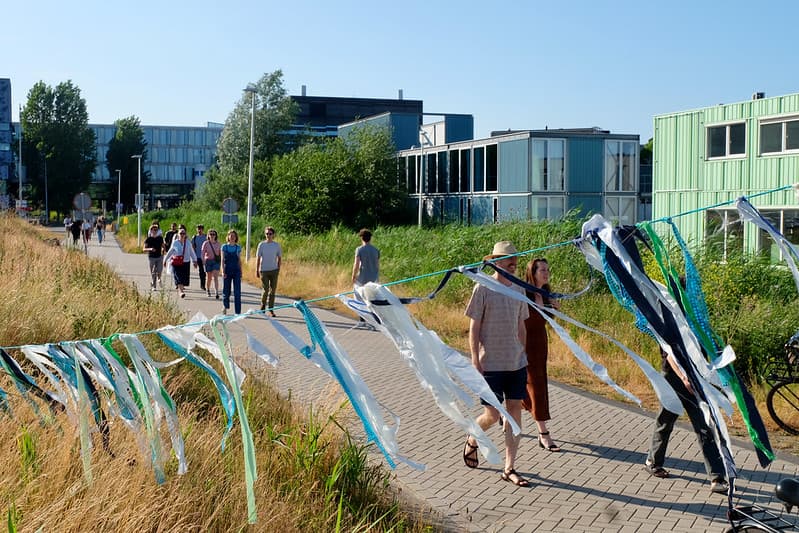
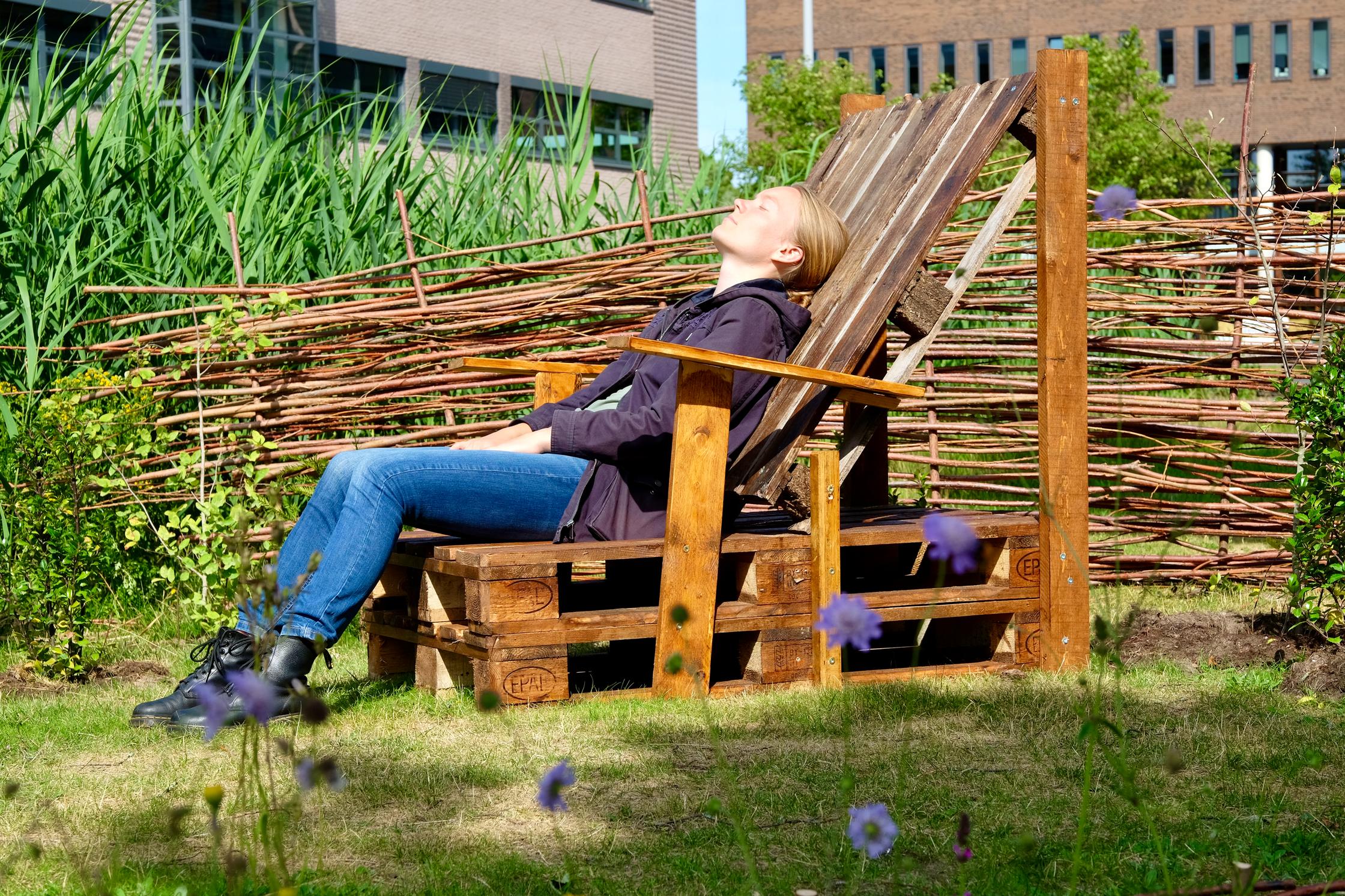
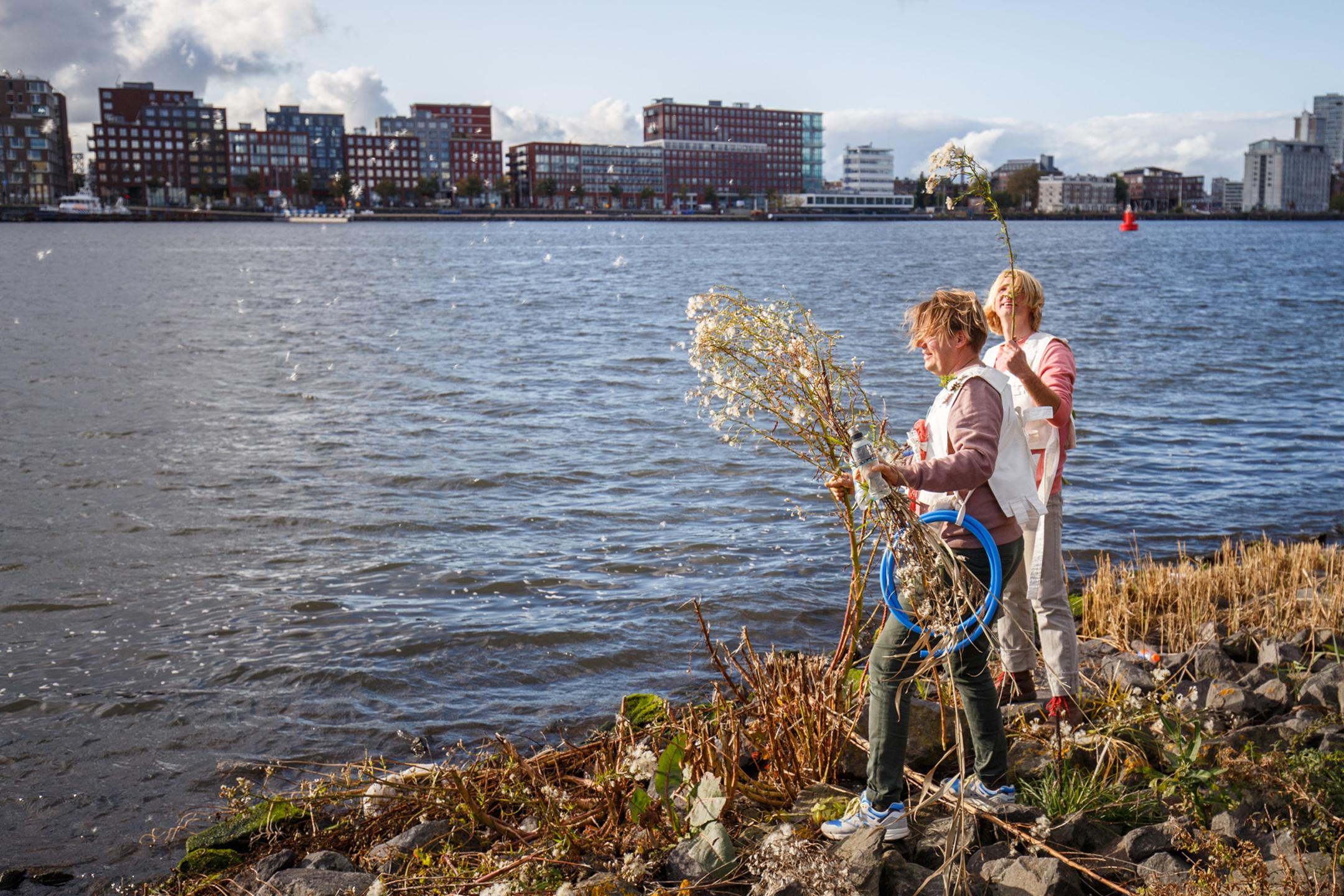
The landscapefestival Met Andere Ogen (With other Eyes) took place during the summer of 2023. Waag Futurelab invited artists, local residents and scientists to look at the living environment from a new perspective. During several workshops, seven interventions were built on the park. We did not only built a more-than-human living room with the Onkruidenier and a mating place for the wolf with Esmee Geerken. By creating these places together, we’ve also built a different relationship with our living environment.
The publication Discover Urban Ecology takes you through the interventions that we're made during the Landscape Festival: Met andere ogen (Through other eyes). Browse through the temporary urban initiatives and read how joint activities can increase biodiversity and ecological awareness of residents.
Waag also organised a workshop on ecology and artistic interventions for the municipality of Amsterdam and the three landowners of the Science Park (Municipality of Amsterdam, NWO, UvA). Together, they looked at how the lessons, perspectives, collaborations and other insights from the landscapefestival Met Andere Ogen could find a place in policy.
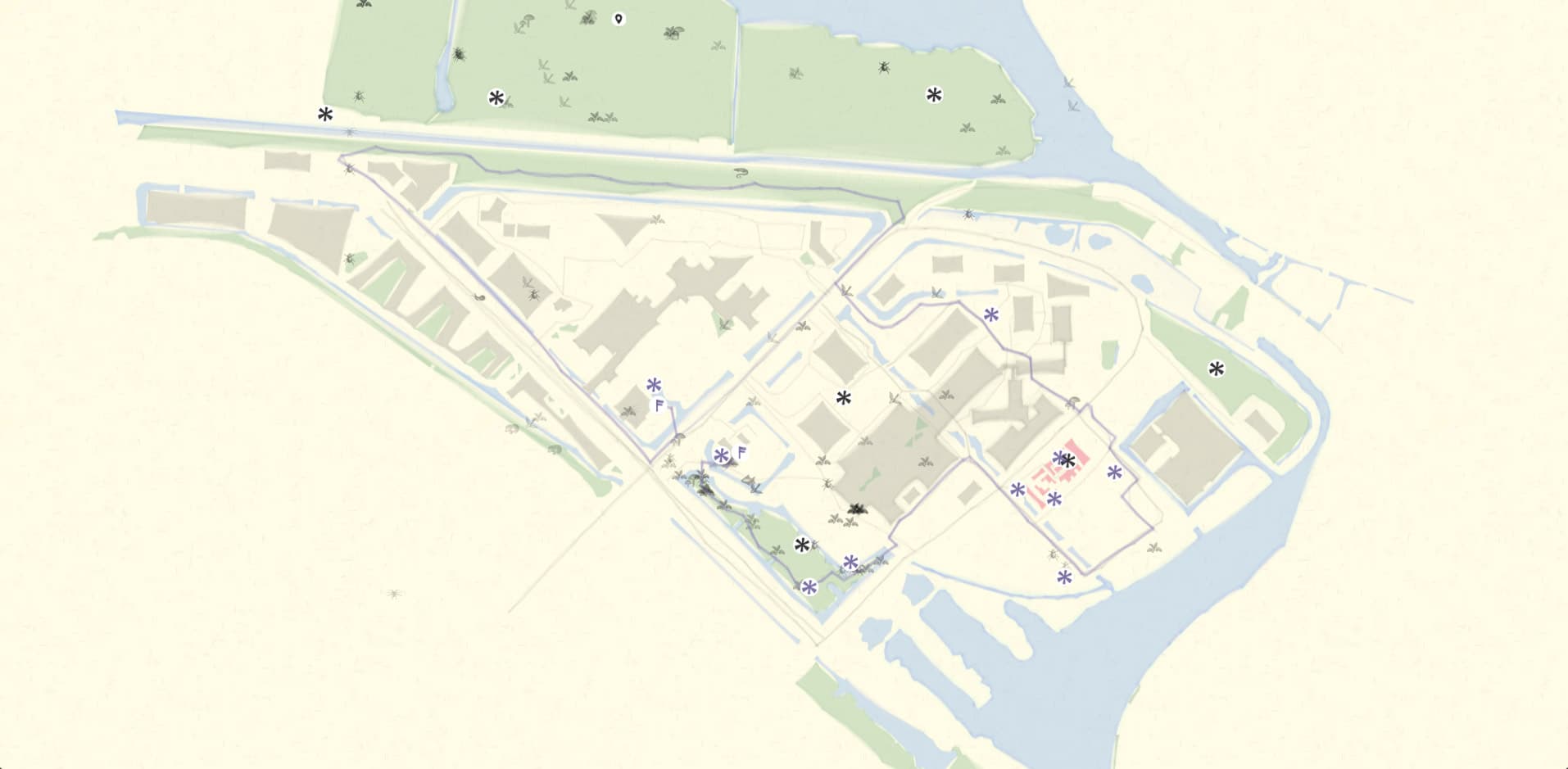
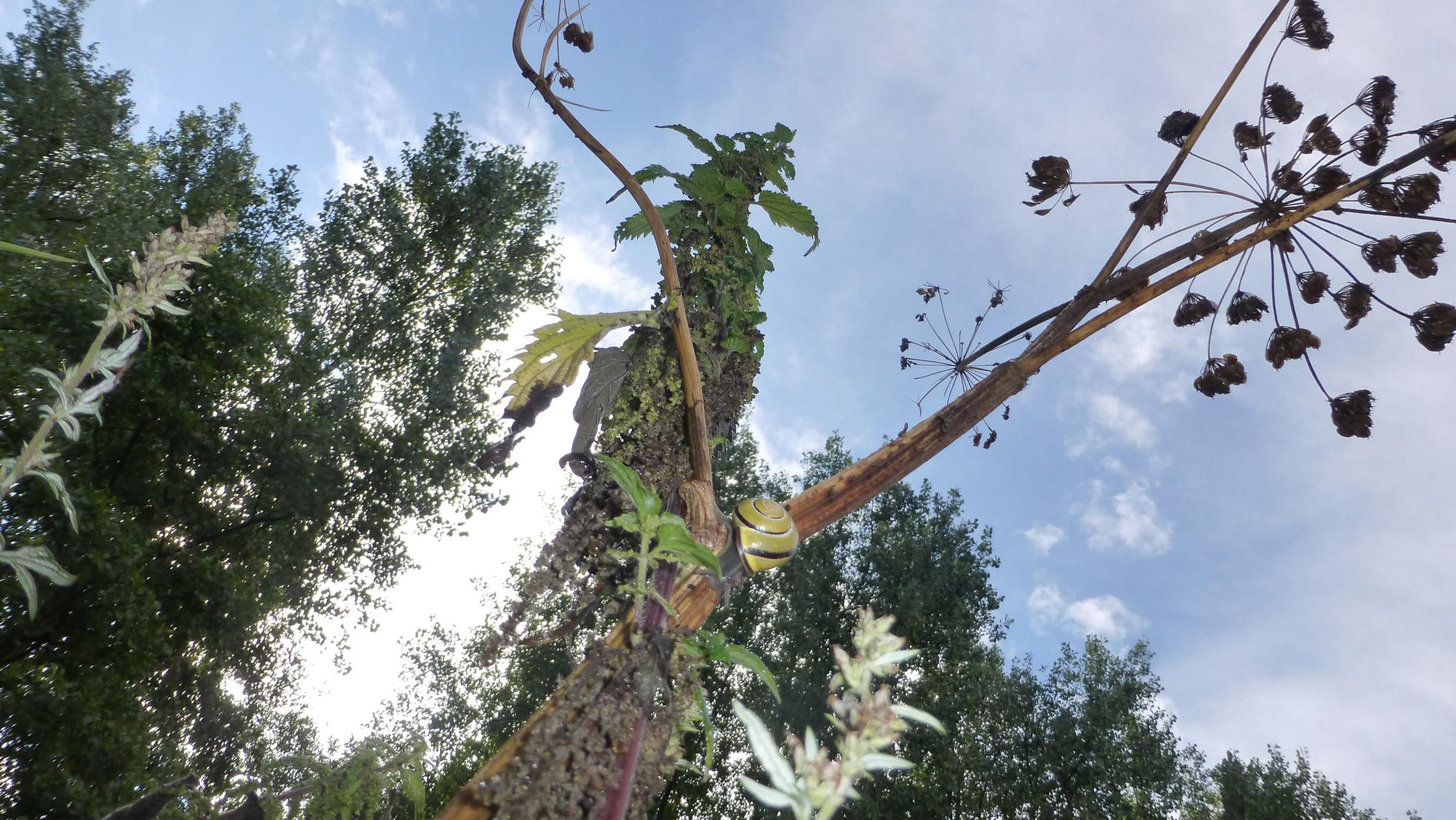
Even if you are not physically at the Science Park, you can discover the biodiversity of the Science Park. Waag developed the Urban Ecology Field Atlas: a subjective map that shows the city as a living place. Various more-than-human inhabitants of the park become visible on the map thanks to the observations that are logged on iNaturalis (nature observations by citizens). Places in the park that contribute to making the city greener are also highlighted. The Field Atlas is never the same, because the Amsterdam Science Park is never the same.
T-Factor was a European project that targeted regenerations in a diversity of urban areas in London, Bilbao, Amsterdam, Kaunas, Milan and Lisbon, with a unique ecosystem of capacity-building for radically new city-making approaches.
The tools and methods that were developed in T-factor, were gathered in the Thematic Toolbox. The toolboc is particularly suggested for policy-makers, technical experts, developers, investors.
The guideTemporary Placemaking shows how to develop thematically focused interventions in a neighbourhood by working together with local communities and stakeholders. The publication provides citymakers with a practical toolkit to develop thematic interventions in their own local context and work together towards inclusive urban regeneration.
Kings Cross Pond Club London. Photo by John Sturrock